
Meet Joe, Sarah and Alex—three fictional characters whose business scenarios illustrate the potential advantages of 3D rendering and animation.

Joe has poured years of hard work into building his independent online store. He’s carefully selected his products, developed relationships with suppliers and built a business he’s proud of.
But despite all that effort, Joe has a serious problem. His website is putting the financial success of his business at risk.
His product images come from different suppliers, each with different backgrounds, lighting and camera angles. Instead of looking like a carefully curated range, his store resembles a jumble of unrelated products.
Joe knows his products can compete with those offered by much larger retailers. But when customers visit his website, they don’t see a business that looks capable of competing with them.
And in online retail, first impressions matter. Customers who aren’t confident about a business can simply shop elsewhere.
Joe could organise a professional photoshoot, but coordinating products from multiple suppliers, arranging studio photography and reproducing consistent results across his entire range would be an enormous and potentially prohibitive expense.
So he explores another option: 3D visualisation.
That’s where Lightforge comes in.
Using his suppliers’ existing 3D models, we create a coordinated collection of product renders with consistent lighting, camera angles and backgrounds.
The difference is dramatic. What once looked like an assortment of unrelated products now looks like a carefully curated collection belonging to one recognisable retail brand.
Joe’s products haven’t changed. But his business now looks like a serious competitor to the big players.
For Joe, the potential return on investment comes from three areas.
1. Customer confidence and conversion.
A professional, consistent shopping experience can help establish credibility and reduce hesitation at the point of purchase. Improving the way products are presented creates an opportunity to strengthen conversion rates and generate more revenue from existing website traffic.
2. Brand equity and competitive positioning.
A cohesive visual identity helps customers recognise Joe’s business as a distinct retail brand rather than simply another reseller. Stronger brand recognition and positioning can contribute to customer loyalty and long-term business value.
3. Production efficiency and scalability.
Using existing CAD models can reduce the logistics and expense associated with photographing products from multiple suppliers. As Joe expands his range, new renders can be produced using established lighting, camera positions and presentation standards, helping maintain consistency without rebuilding the entire visual approach.
Together, these benefits create opportunities for improved sales performance, lower production overheads and a stronger competitive position.
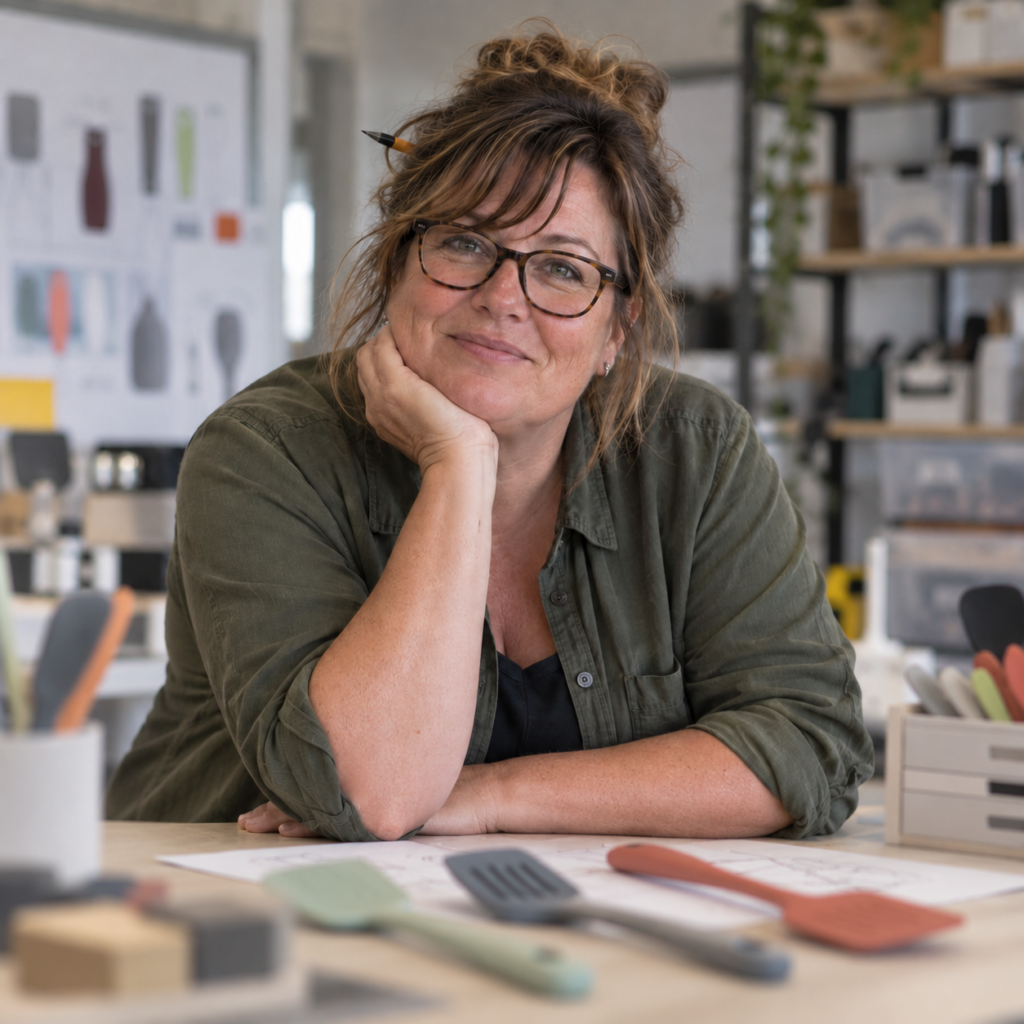
Sarah runs a growing business developing innovative consumer products. She listens carefully to her customers, using their feedback to continually improve her designs.
Sometimes it’s a small adjustment that makes a product easier to use. Other times, it’s a significant improvement that gives her an edge over the competition.
But there’s a problem. Every time Sarah improves a product, her existing marketing images become outdated.
Her website, catalogues, advertising and promotional materials all feature the previous version.
With traditional photography, updating those images means producing new physical samples, organising another photoshoot and attempting to recreate the original lighting, camera angles and composition.
Even slight differences can make the replacement photographs difficult to incorporate into her existing marketing layouts.
And Sarah knows that in a competitive market, speed matters. Every delay between improving a product and getting it in front of customers gives her competitors an opportunity to catch up.
She can’t afford to spend weeks organising photography and rebuilding marketing materials every time she improves a product.
That’s where Lightforge comes in.
When Sarah updates a product, she supplies us with the revised 3D model.
We return to her original rendering scene, using the same camera positions, lighting and settings to produce updated images that match the established presentation.
With transparent backgrounds, Sarah can replace the outdated product images in her existing marketing materials, without having to redesign everything around them.
Sarah can keep improving her products and bring those improvements to market faster, without having to reinvent the marketing that supports them.
For Sarah, the return on investment extends well beyond the cost of producing new images.
1. Reduced production costs.
Reusing established 3D rendering scenes can significantly reduce recurring expenditure on physical samples, studio photography and post-production. Each product update becomes an opportunity to build on work already completed rather than commission an entirely new production.
2. Speed to market and competitive advantage.
In innovation-driven markets, the time between developing an improvement and presenting it to customers can be commercially significant.
By reducing the time required to update marketing assets, Sarah can respond more quickly to customer feedback, introduce improvements sooner and strengthen her competitive position.
3. Protecting existing marketing investment.
Sarah’s website, advertising campaigns, catalogues and promotional materials represent a substantial investment.
By maintaining consistent camera angles, lighting and transparent backgrounds, updated product renders can often replace earlier versions without requiring extensive changes to existing layouts.
This extends the useful life of her marketing assets and reduces unnecessary creative production.
4. The opportunity cost of Sarah’s time.
Sarah’s time is one of her business’s most valuable resources.
Every hour spent coordinating photographers, organising samples and managing marketing revisions is an hour unavailable for product development, customer engagement and business growth.
Streamlining the production of updated imagery allows Sarah to concentrate on the activities that create the greatest value for her business.
Sarah’s ROI comes from lower production costs, preserved marketing investment, more productive use of her time and the competitive advantage of getting improved products to market sooner.
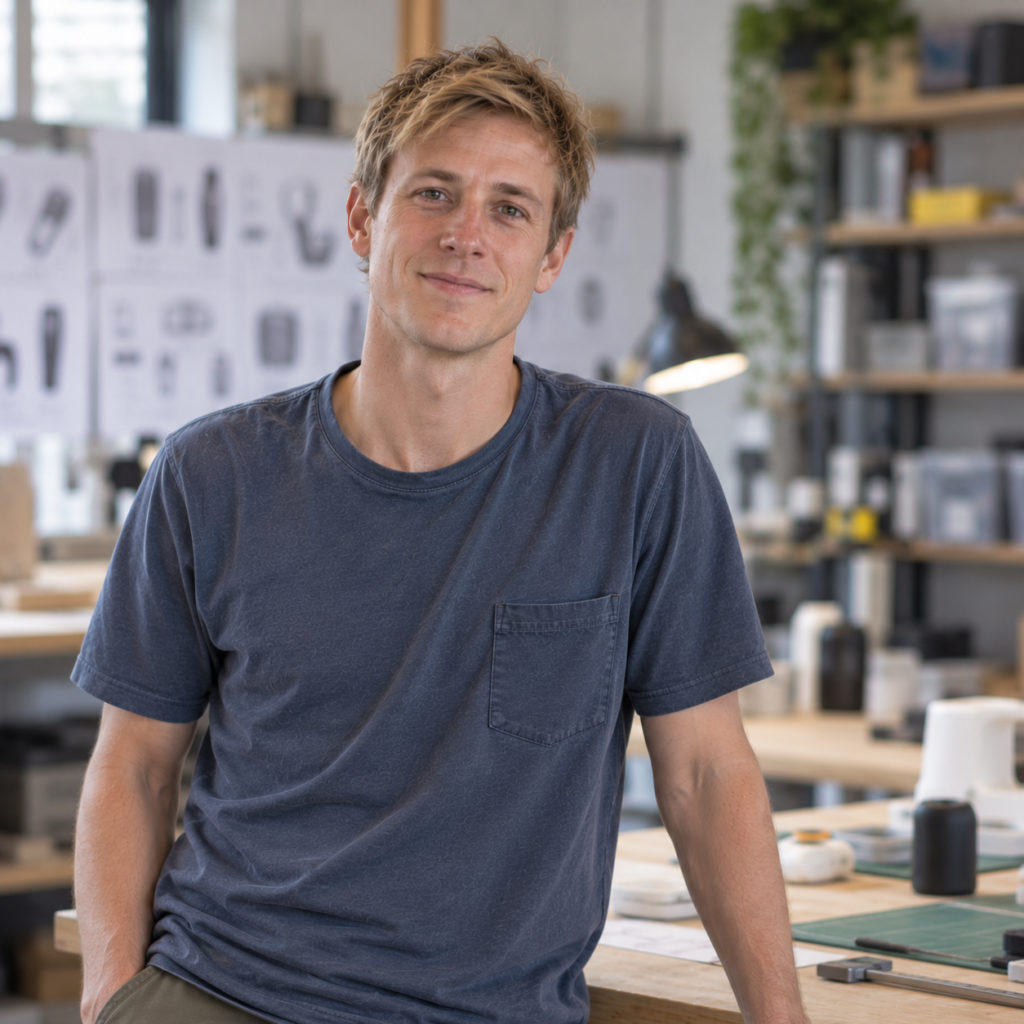
Alex has spent months developing an innovative new consumer product. He’s invested considerable time and money in research and design, and his product is taking shape.
The design is largely complete, but Alex is approaching a critical decision.
Does he commit to manufacturing, with all the financial risk that involves, or does he find out what the market thinks first?
Before making that investment, Alex wants to approach potential distributors, speak with retailers and conduct focus groups to understand how customers respond to his product.
But there’s a problem. He needs people to see what he’s proposing, understand its features and imagine how the finished product will look and function.
Technical CAD drawings aren’t going to communicate that effectively, and commissioning physical prototypes purely for presentations and market research could be costly.
That’s where Lightforge comes in.
Using Alex’s existing 3D models, we create realistic product visualisations that bring his proposed design to life.
For the first time, Alex can see how his finished product is intended to look, complete with realistic materials, lighting and surface finishes. He can explore different colourways and configurations, comparing possibilities without manufacturing a physical sample for each one.
And he’s not the only one who can see them. With professional product renders and short animations, Alex can present these alternatives to potential distributors, retailers and focus groups, gathering valuable feedback before committing to production.
Their responses may confirm his direction, reveal opportunities for improvement or help him avoid an expensive mistake.
Alex could even take things a step further. With professional product imagery ready to use, he could begin marketing his product, building customer interest and potentially accepting pre-orders before manufacturing begins.
Rather than waiting until his product is physically available, Alex has an opportunity to test demand, build momentum and potentially generate early revenue to help fund production.
Alex can make one of the biggest financial decisions of his business with considerably more information and confidence.
For Alex, the potential return on investment comes from five areas.
1. Reducing financial risk.
Manufacturing a new product can require substantial upfront investment in tooling, materials, production and inventory.
By using 3D visualisations to support market research before committing to production, Alex can gather feedback that helps him assess demand and refine his product.
2. Product refinement and market validation.
By visualising different colourways, materials and configurations before manufacturing, Alex can evaluate the appearance of his own product and identify opportunities for improvement.
He can then test those alternatives with focus groups, retailers and potential customers, gathering feedback that helps inform his final design decisions.
This reduces the risk of committing to expensive tooling, production and inventory before understanding which product variations may appeal to the market.
3. Engaging commercial partners.
Clear, professional visualisations help distributors and retailers understand the proposed product and assess its potential suitability for their markets.
This can support early commercial discussions and help Alex identify potential distribution opportunities before manufacturing begins.
4. Making better use of development investment.
Alex’s existing CAD models represent considerable design and engineering work.
Using those models for product visualisation extends their value beyond technical development, providing assets that can support market research, commercial presentations and, once the design is finalised, future marketing.
5. Early revenue and pre-orders.
Professional product visualisations can allow Alex to begin marketing before manufacturing, creating opportunities to build an audience, generate enquiries and accept pre-orders.
Pre-orders can provide a stronger indication of genuine purchasing interest than expressions of enthusiasm alone. They may also generate funds that contribute towards initial manufacturing costs.
This gives Alex an opportunity to build commercial momentum and potentially reduce his reliance on upfront capital. Accepting pre-orders creates customer delivery and refund obligations, so this would require realistic production plans and clear customer communication.
Alex’s ROI comes from reducing uncertainty before a major manufacturing investment, making more informed design and commercial decisions, and potentially avoiding costly mistakes, while opening opportunities to generate interest and early revenue.
We understand that your designs may be commercially sensitive. If required, we’re happy to sign a confidentiality agreement (CA) before any files are exchanged.
Whether you know exactly what you need, have a rough idea or haven’t the faintest clue where to start, we’d love to hear from you. Tell us a little about what you’ve got in mind, and we’ll take it from there.